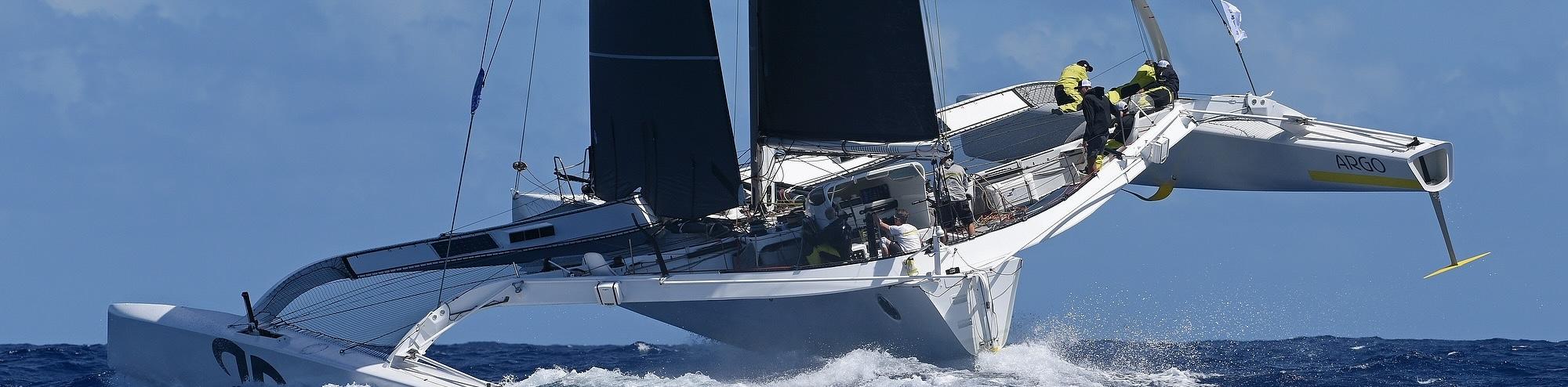
When the start gun fires in Lanzarote for the 2026 RORC Transatlantic Race on 11 January, two of the most extraordinary offshore racing machines will once again go head-to-head across the Atlantic.
The MOD70 trimarans Argo (USA) and Zoulou (FRA), skippered by Jason Carroll and Erik Maris respectively, are capable of sustaining speeds of more than 35 knots. Between them, they have set records, crossed oceans, and rewritten the limits of human endurance.
This January, it will be two years since Argo and Zoulou last raced across the Atlantic. We spoke to Argo’s project manager Chad Corning, who has been and ‘Argonaut’ for 17 years and will be on board once again for the 3,000 nautical-mile battle. As Argo’s Project Manager, Chad takes care of business for the complete management of the project. Argo came out of the water in Marina Lanzarote on 15 October and is back in the water for training in December before the big start in January.
This feature takes a deep dive inside the Argo project ahead of the race, exploring the technology, preparation and people behind one of offshore racing’s most compelling machines — and why another transatlantic duel promises to push limits, nerves and speed records all the way to Antigua.
---Social-Media-14.jpg) Argonaut Chad Corning © Arthur Daniel/RORC
Argonaut Chad Corning © Arthur Daniel/RORC
What’s changed aboard? Any upgrades, refinements, or new systems since 2024?
Chad - The boat is really in a happy place in terms of reliability, so it’s just been subtle tweaks aimed at improving efficiency. Fitting a Starlink has been a big gain, giving us access to as much weather data as we can process, as well as keeping us a bit more connected on the longer passages.
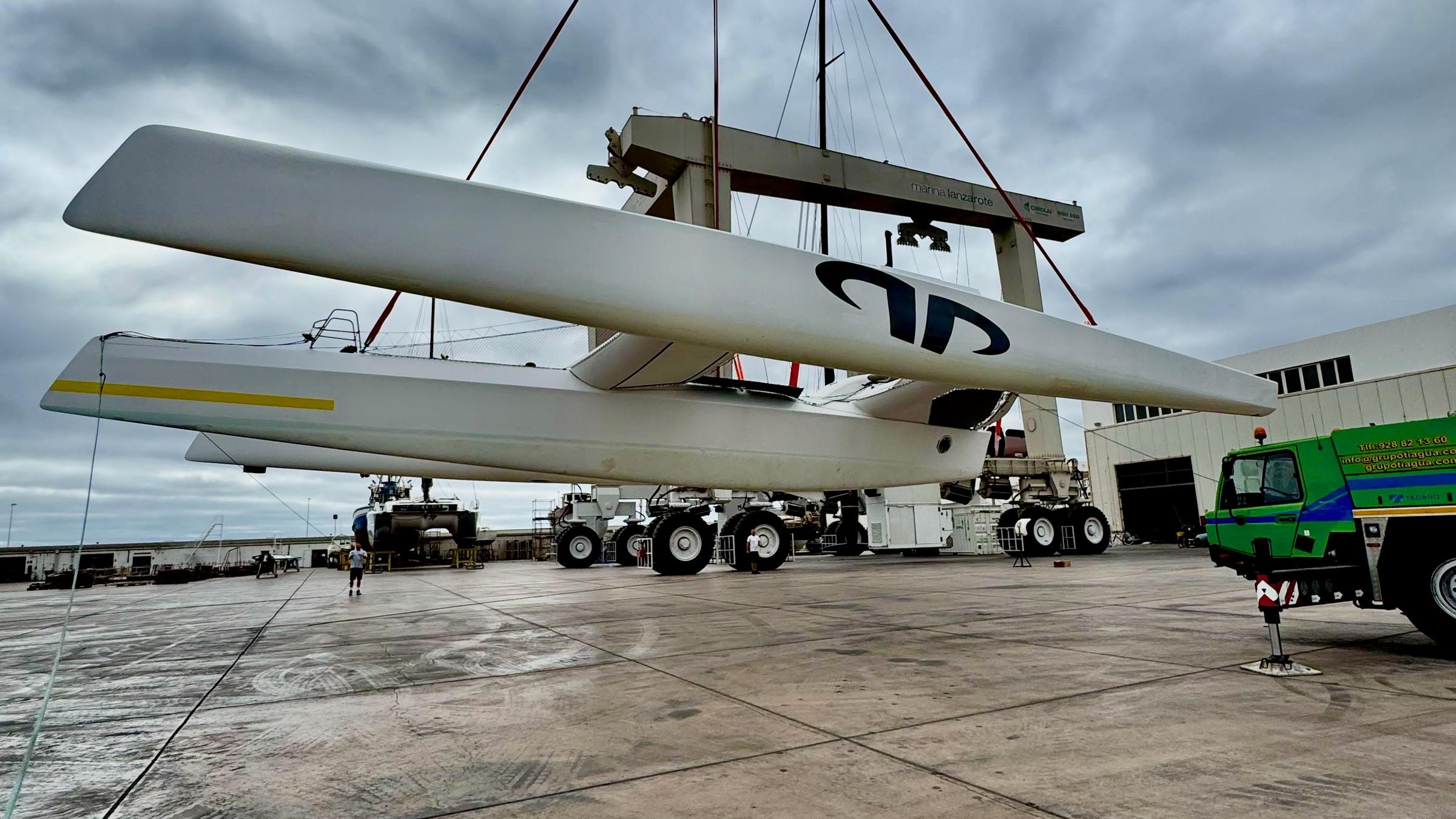 Argo lifted out at Marina Lanzarote © Team Argo
Have there been any major structural or systems checks as part of bringing Argo back to race-ready condition for the Transat?
Chad - The boat undergoes annual NDT scans, which we’ve just completed in Lanzarote during our yard period. The major structural points of the boat, as well as the mast and all the appendages, are scanned and compared to the archive of past scans. A few issues always pop up —thankfully, just minor ones this time. All of the mechanical systems are removed from the boat and serviced/rebuilt. Foil and rudder bearings, winches, and the hydraulic systems all go to the bench for a refresh.
-(2).jpg) Argo celebrate winning the 2024 RORC Caribbean 600 (Sam Goodchild far right) © RORC
Argo celebrate winning the 2024 RORC Caribbean 600 (Sam Goodchild far right) © RORC
Are there any new crew members or key roles that will shape how the team operates this time?
Chad - Sam Goodchild will join us for this one. Sam is very much cut from the same cloth as Brian Thompson; his calm and focused demeanour is a real asset. Otherwise, the squad remains much the same as past races.
What made the team decide to return to the RORC Transatlantic Race this season?
Chad - It’s a beautiful trade winds race that always has a few curveballs mixed in. The last two editions we’ve participated in had quite unusual weather with a long leg south to the Cape Verde islands to pick up the trade winds in 2024 and a big arc to the North to go through a low in the 2022 edition. With the change of finish now Antigua, perhaps a more straightforward and direct route this time? We hope so.
What are your goals this year: pure line honours, a record attempt, or a close match race with Zoulou?
Chad - The close racing is what brings us back. The MODs are almost always in contact; mere minutes separated Zoulou and Argo in all our races this past season. More of the same, please, in the RORC Transatlantic. The winner of the MOD battle will set a new record, so it’s a great incentive to eke out all those little tactical and boat speed gains and get to Antigua first.
2.jpg) MOD70 Argo © Arthur Daniel/RORC
MOD70 Argo © Arthur Daniel/RORC
From a project perspective, how do you prepare a MOD70 for a 3,000-mile sprint — what are the key risk areas or maintenance priorities?
Chad - We want to control as many variables as we can. The yard period in Lanzarote sets the table for that, as we can feel comfortable and confident that the boat’s systems are operating at the top level. The biggest risk for us is hitting something out there. The foils and float rudders are relatively fragile and are vulnerable to impacts. We lost a float rudder in the 2022 edition and had several impacts with debris in 2024, resulting in some damage to the steering system and one of the foils. The only strategy is hope when it comes to impacts, especially at night. So, hoping that this does not affect the race for either of the MOD’s and it just comes down to straight racing.
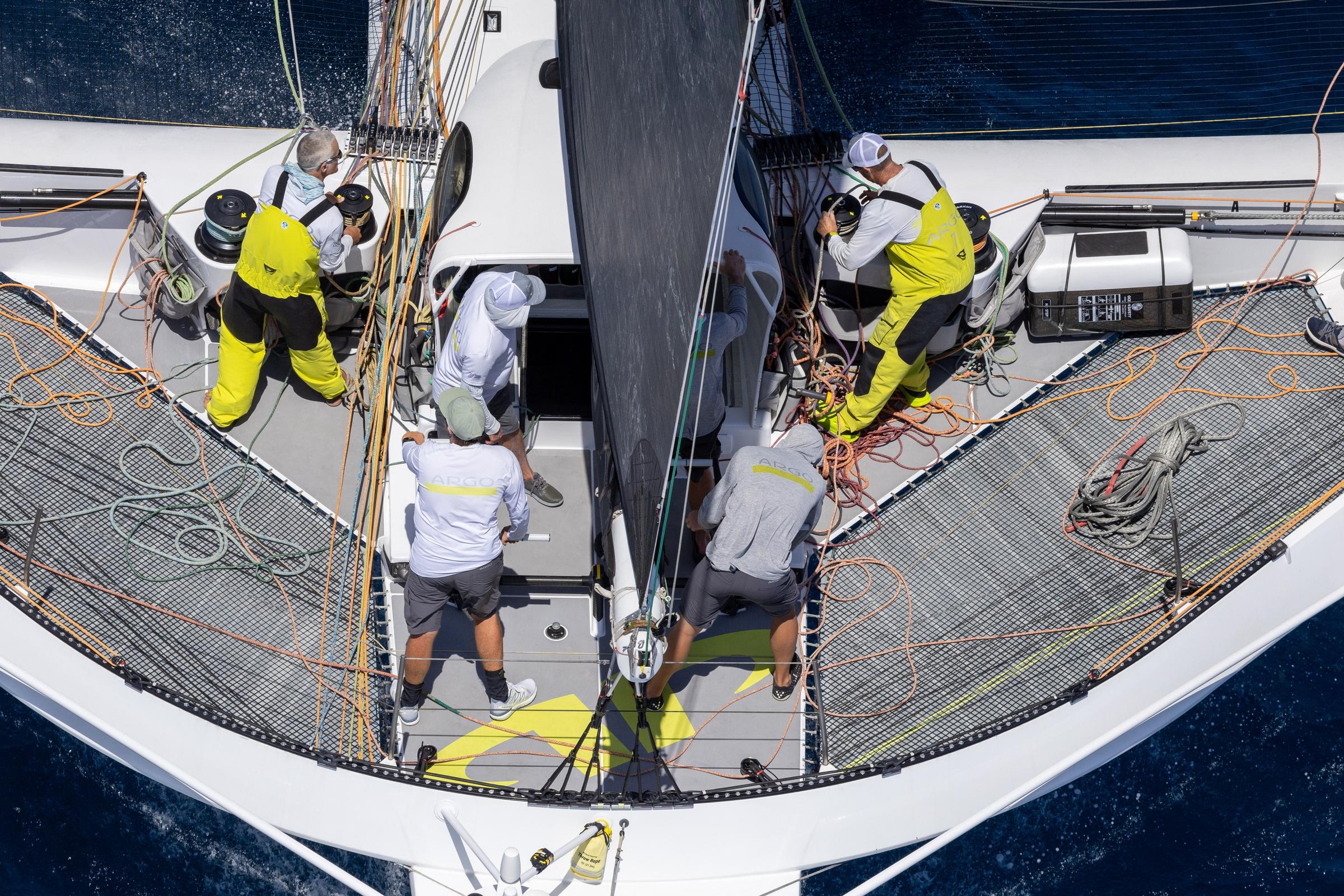 MOD70 Argo Crew © Tim Wright/RORC
MOD70s are famously powerful — how do you balance outright speed with reliability over a long transatlantic push?
Chad - The MOD’s are built tough and are ready to be pushed hard. The humans are really the weak link in the chain. Handling mistakes or imprecise steering can snowball when sailing at speed. At the upper end of the wind range, we’ll sometimes set a speed limit that feels safe yet fast. Brian is famous for issuing “speeding tickets” when the helm gets a bit enthusiastic in this scenario. Trust me, you don’t want one of those. If leading, we tend to be a bit more conservative, but we always keep the risk/reward equation in mind. With the close sailing we’re expecting in this race, the intensity will be dialled up, and it’s likely we’ll have to get comfortable being uncomfortable!
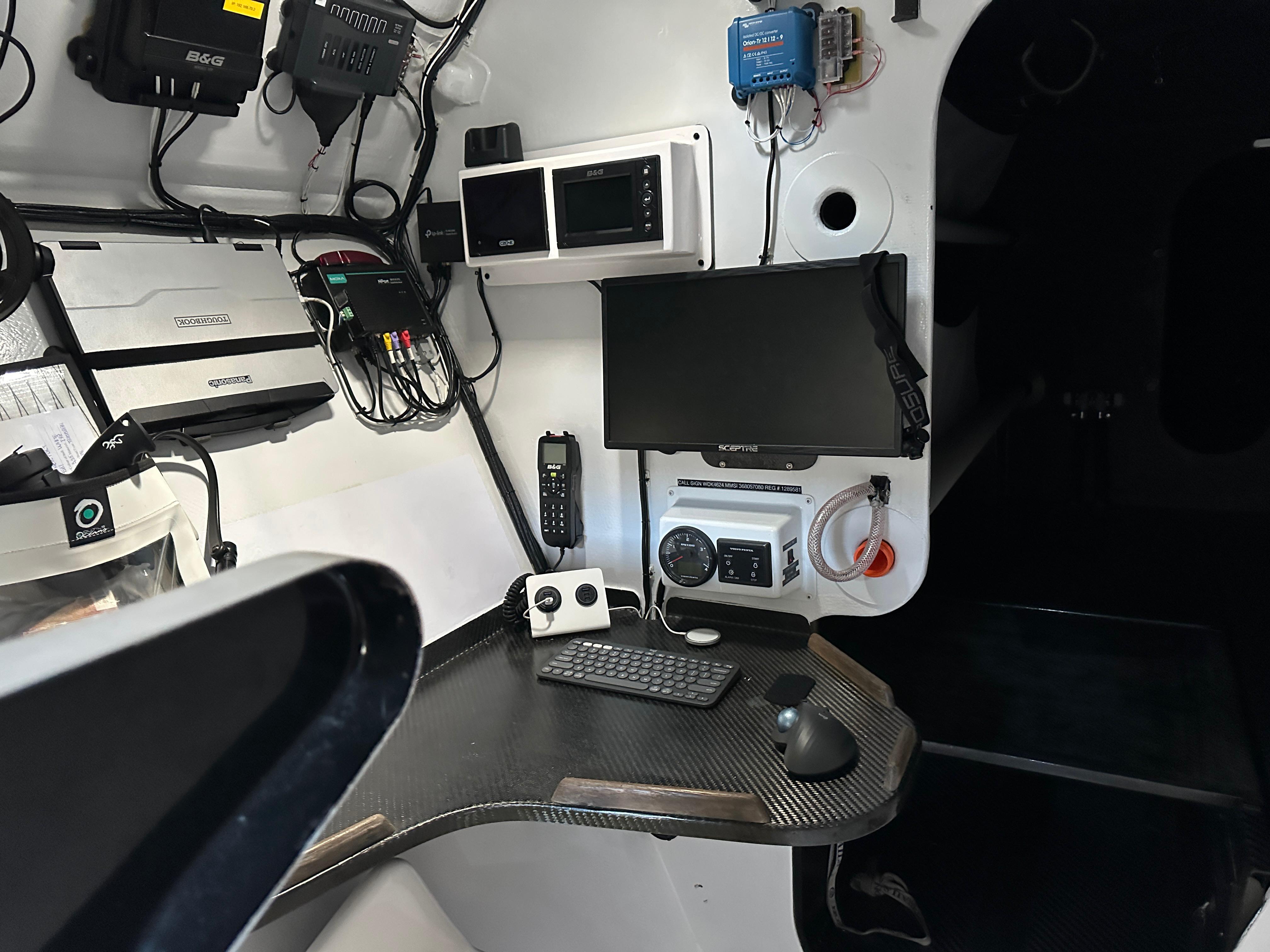
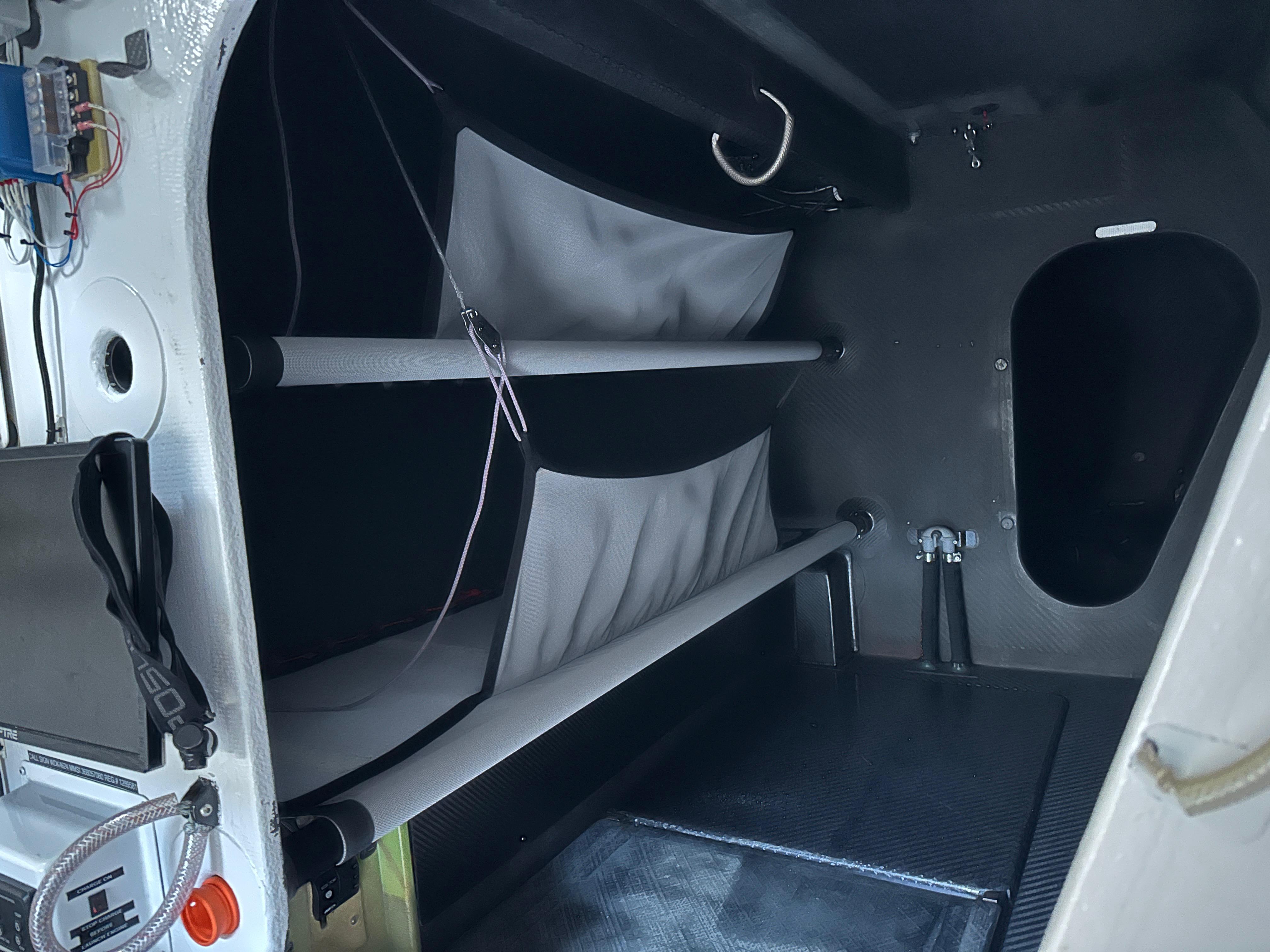
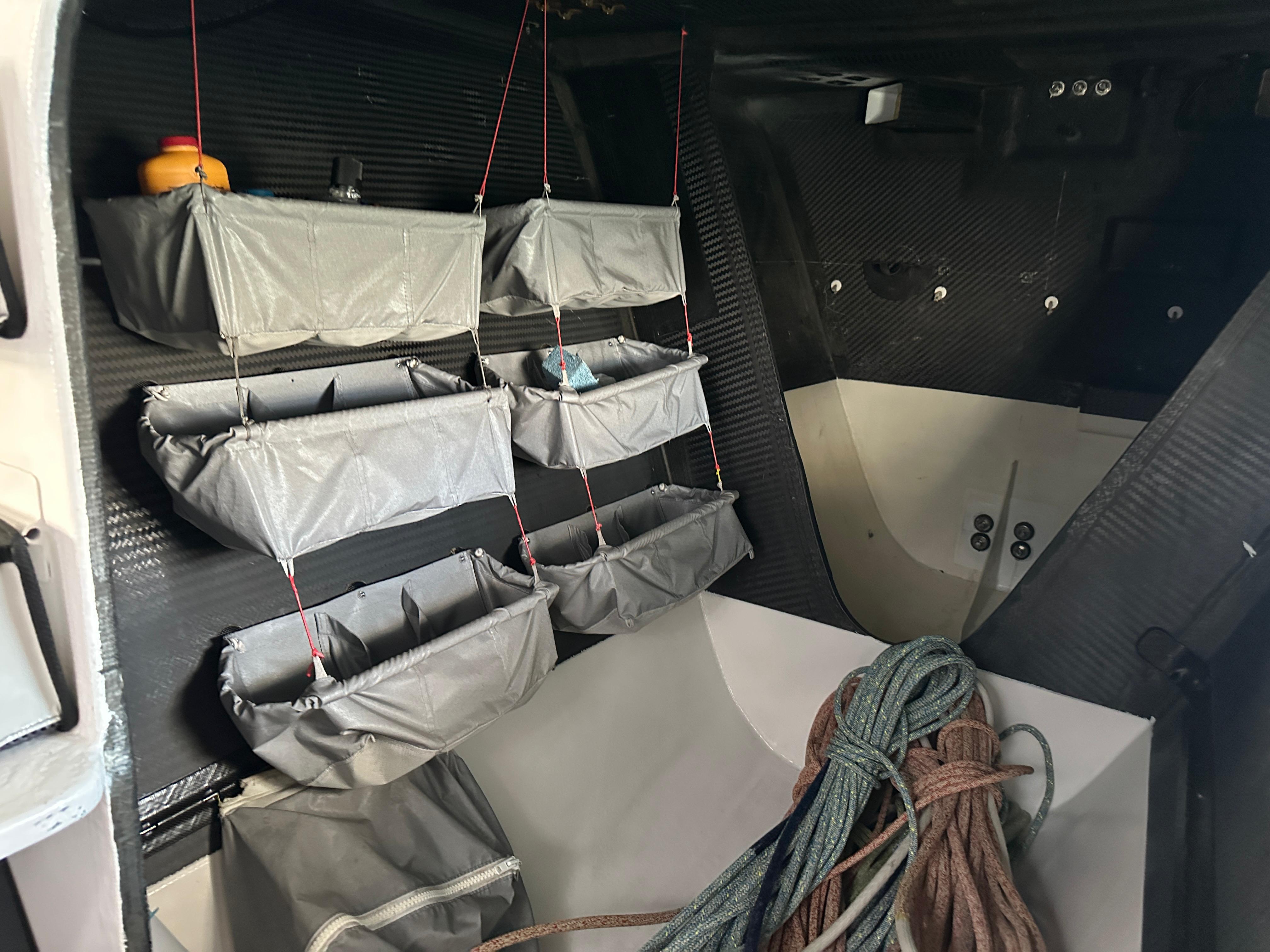
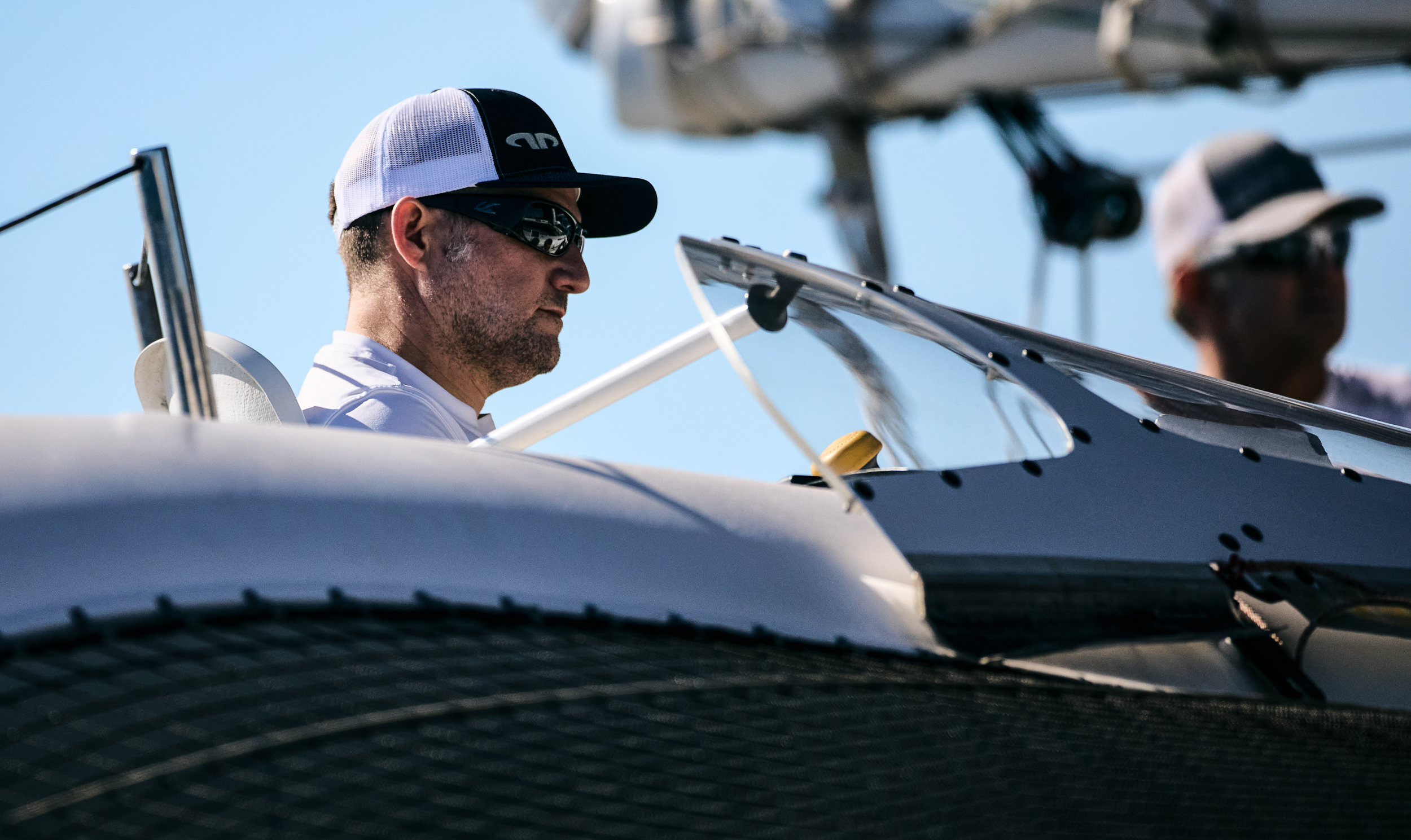
Above: Inside MOD70 Argo (© Team Argo). Argo from above © Tim Wright/RORC. Jason Carroll on the helm © Robert Hajduk. 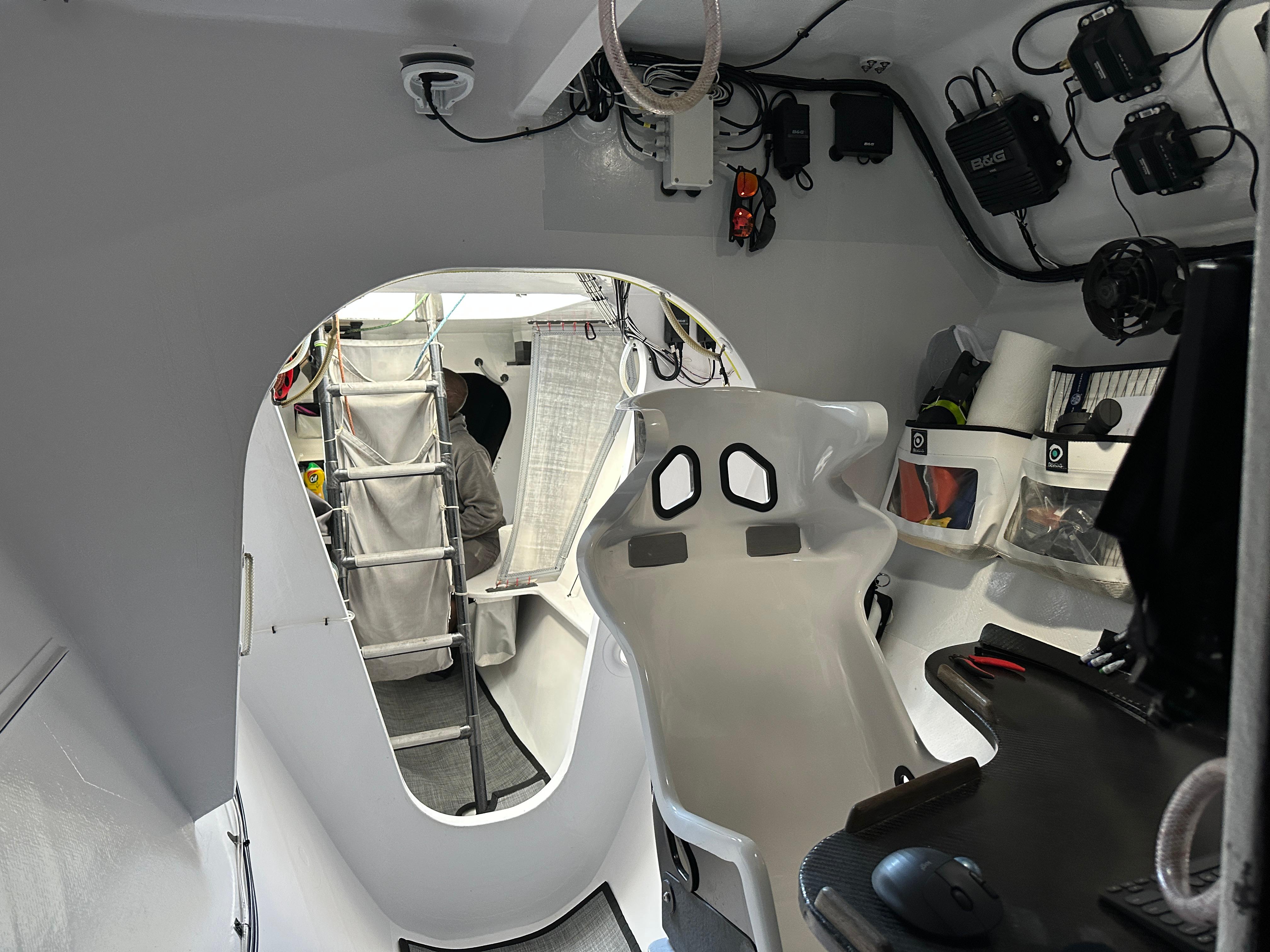
.jpg)
The stage is set for another spectacular MOD70 Atlantic showdown. The RORC Transatlantic Race, in association with the International Maxi Association and Yacht Club de France, will start from Marina Lanzarote on 11 January 2026, with 22 teams lining up to take on the 3,000 nautical mile challenge to Antigua.